10 Creative Egg Dishes From Around the World
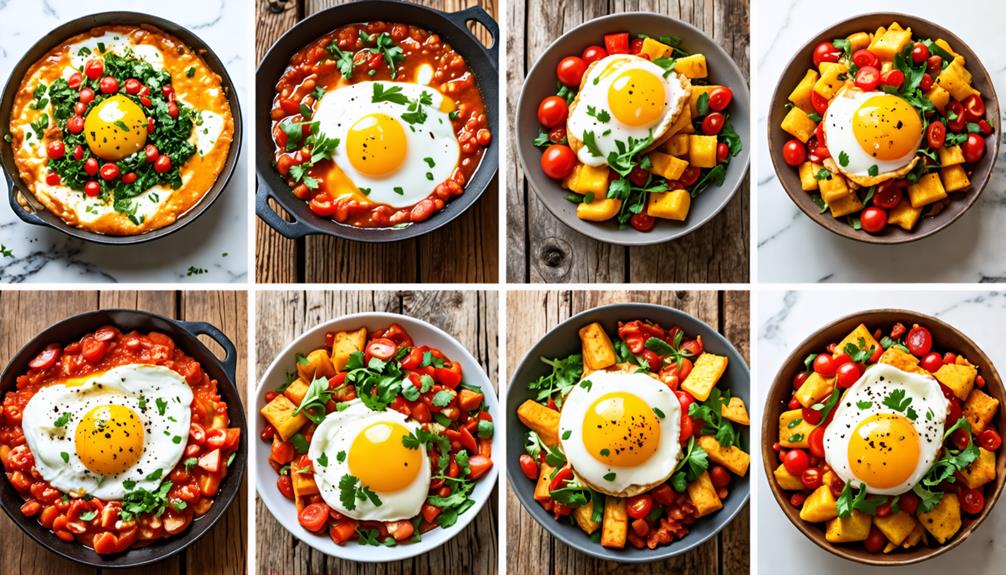
Eggs are more versatile than you might think. Around the world, different cultures have created unique dishes featuring this simple ingredient. For a hearty start, try Hawaii's Loco Moco, which includes a bed of rice topped with a hamburger patty, a fried egg, and gravy. In Tanzania, Chipsi Mayai combines an omelet with fries for a filling dish.
Italy offers a variety of ways to enhance eggs. One popular method is to add tomatoes and herbs for a flavorful frittata. In Japan, Tamagoyaki is a sweet and savory rolled omelet. This dish often includes sugar, soy sauce, and mirin.
These dishes not only satisfy your taste buds but also offer a glimpse into different culinary traditions. Exploring how various cultures prepare eggs can add variety to your meals, providing both nutrition and enjoyment.
Ghanaian Egg Culture
Ghanaian cuisine prominently features eggs in a wide range of dishes, from breakfast to dinner. Eggs are integrated into meals like Jollof rice and Waakye, adding both flavor and nutrition. One of the most common ways to enjoy eggs in Ghana is by boiling them. Boiled eggs are a household staple and a popular street food, often served with a spicy pepper mixture known as shito. This combination showcases the bold flavors that Ghanaians enjoy.
In West Africa, there is also some light-hearted humor about the frequent use of eggs in various recipes. Friends and family often tease each other, and this banter sometimes extends to social media, where Ghanaians acknowledge their reliance on this versatile ingredient.
Eggs are valued in Ghanaian cuisine for their high nutritional content and flexibility. They are a key component in traditional dishes, providing a reliable source of protein and other essential nutrients. Whether you are eating a simple boiled egg with shito or a rich plate of Jollof rice, eggs are an important part of Ghanaian food culture.
Hawaiian Loco Moco
Hawaiian Loco Moco is a comforting and affordable dish featuring a unique flavor combination. This hearty meal includes a beef patty, a fried egg, and savory gravy served over rice. You can customize it by adding your favorite toppings, which reflect the rich culinary diversity of Hawaii.
Unique Flavor Combination
Exploring the unique flavor combination of Hawaiian Loco Moco reveals a delightful mix of textures and tastes. This dish stands out among egg dishes worldwide. It features a fried egg on top of a juicy beef patty, all served over steaming rice. The runny yolk from the egg blends with savory gravy, creating a rich, comforting flavor in each bite.
Loco Moco is not just a hearty meal; it offers a unique flavor combination that is both satisfying and versatile. You can customize it to your liking by adding sautéed mushrooms or experimenting with different sauces. The beef patty, similar to a gourmet Salisbury steak, adds depth of flavor that pairs well with the other ingredients, showing how traditional dishes can adapt to local tastes and ingredients.
Whether you prefer classic comfort food or want to try something new, Hawaiian Loco Moco provides a flavorful experience. Its blend of textures and flavors makes it a go-to for anyone seeking a satisfying meal.
Affordable Comfort Food
Hawaiian Loco Moco is a standout comfort food known for its affordability and satisfaction. This dish features a beef patty on a bed of rice, topped with a fried egg and covered in rich gravy. It's a filling meal that won't strain your budget.
Created in the 1940s for diners seeking inexpensive and filling meals, Loco Moco offers a blend of flavors. The runny yolk of the fried egg enhances the beef patty and rice, making each bite unique. Despite its simplicity, Loco Moco has gained popularity outside Hawaii, appearing in restaurants and food festivals across the United States.
Here are some reasons to try Loco Moco as an affordable comfort food:
- Hearty Ingredients: Beef, rice, egg, and gravy create a satisfying meal.
- Versatile Preparation: Customize it with vegetables, bacon, or different proteins.
- Easy to Make: Simple ingredients and straightforward cooking methods make it easy to prepare at home.
- Unique Flavor: The combination of savory beef, rich egg yolk, and flavorful gravy provides a memorable taste.
Give Loco Moco a try for a hearty and affordable comfort meal.
Versatile Meal Option
Consider the versatility of Hawaiian Loco Moco. This dish features a juicy beef patty served over rice and topped with a fried egg. It's a hearty meal suitable for breakfast, lunch, or dinner. The rich gravy enhances the beef's flavor and complements the runny yolk, creating a comforting experience.
Originally created for budget-conscious diners, Loco Moco remains an affordable yet gourmet-like dish. Think of it as a sophisticated version of Salisbury steak, with the added comfort of a runny egg. The egg adds texture and flavor, making this dish suitable for any time of day. Whether you're craving a robust breakfast or a fulfilling dinner, Loco Moco fits the bill.
This Hawaiian favorite shows that eggs aren't just for breakfast. Their ability to blend into diverse dishes makes them a key ingredient in this adaptable meal. So, next time you need a dish that's both comforting and flexible, try Loco Moco.
Tanzanian Chipsi Mayai
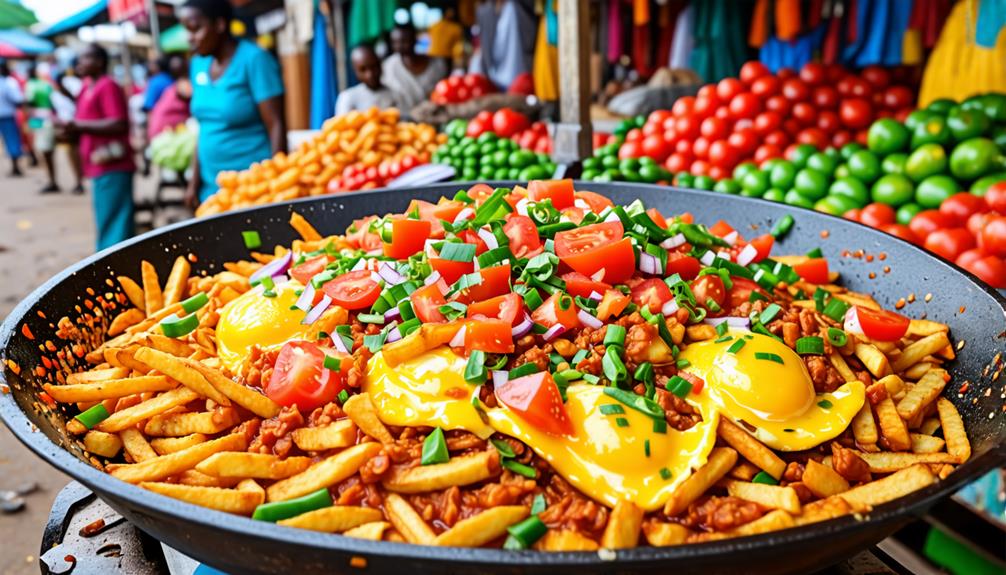
Tanzanian Chipsi Mayai combines the savory taste of an omelette with the crispy texture of French fries. This popular street food offers a unique blend of flavors and textures. The dish is simple: golden, crispy French fries are folded into a fluffy omelette, creating a satisfying and flavorful meal.
You can find Chipsi Mayai at local street vendors, making it an easy snack or meal option. It is often served with kachumbari, a spicy tomato salad. The tangy kachumbari adds a refreshing contrast to the rich omelette, balancing the savory notes.
Here are four key points about Chipsi Mayai:
- Versatile Ingredients: Some versions use tater tots instead of French fries.
- Street Food Staple: Widely available from street vendors across Tanzania.
- Quick Meal: Ideal for a fast, satisfying snack or meal.
- Comfort Food: Combines global egg-based dishes with local flavors.
Try it and enjoy a true taste of Tanzanian street food!
Italian Eggs in Purgatory
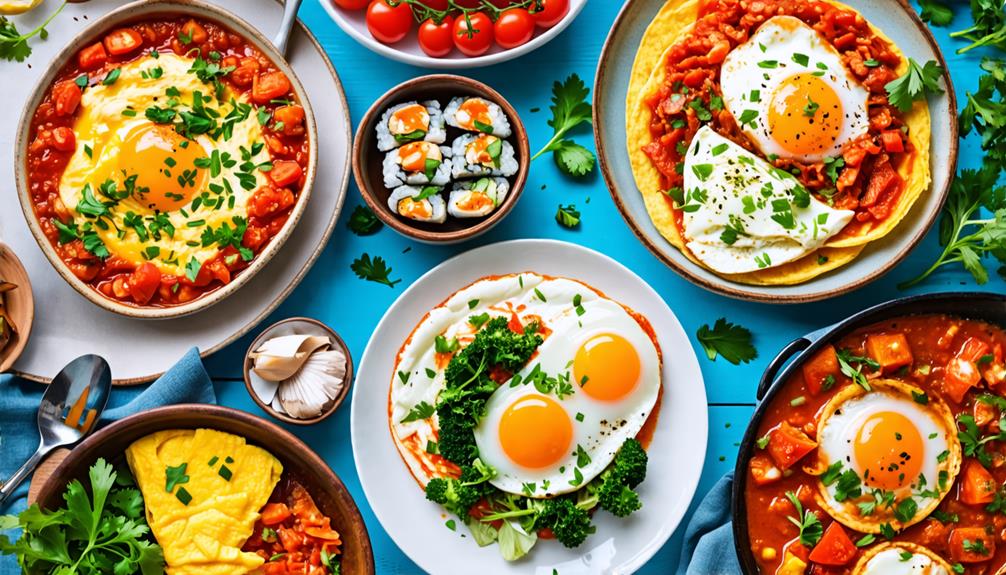
To prepare Italian Eggs in Purgatory, poach eggs in a spicy tomato sauce infused with herbs and spices. This dish, often enjoyed for breakfast or brunch, showcases Italy's love for simple and hearty recipes using fresh ingredients. You can add hot Italian sausage, bell peppers, or cheese to enhance the flavors. This offers several variations for a personalized touch.
Ingredients and Preparation
Italian Eggs in Purgatory is a savory dish featuring a rich tomato sauce with garlic, red pepper flakes, basil, and oregano. Follow these steps to create this flavorful meal.
- Prepare the Sauce: Heat olive oil in a large skillet over medium heat. Add minced garlic and red pepper flakes, and sauté until fragrant. Pour in crushed tomatoes, then stir in basil and oregano. Let the sauce simmer for 10-15 minutes to blend the flavors.
- Add Optional Ingredients: To enhance the sauce, you can include slices of hot Italian sausage or diced bell peppers. These additions will add depth and complexity to the dish.
- Poach the Eggs: Make small wells in the simmering sauce and gently crack the eggs into them. Cover the skillet and cook until the egg whites are set but the yolks remain runny, about 5-7 minutes.
- Serve: Serve the poached eggs and sauce hot with crusty Italian bread. The bread will help soak up the flavorful sauce.
This simple yet rich preparation is sure to impress at any meal.
Cultural Significance
Eggs in Purgatory, or "Uova in Purgatorio," represents the essence of Italian comfort food. This dish offers a hearty and satisfying meal, embodying Italian heritage. The eggs are cooked in a spicy tomato sauce infused with herbs like basil and oregano, showcasing the rich yet simple flavors of Italian cuisine.
This dish is more than just ingredients; it's an experience. Often served with crusty bread, it emphasizes the communal aspect of Italian dining. The origins of Eggs in Purgatory are debated, but many attribute it to Southern Italy, where spicy tomato dishes are common.
The cultural significance of this dish extends beyond Italy. You can serve it with injera, an Ethiopian flatbread, or use hard-boiled quail eggs for a unique twist. Eggs in Purgatory's lively presentation and robust flavors make it popular in both households and restaurants, celebrating the universal appeal of eggs as a versatile and comforting ingredient.
Flavor and Variations
The cultural significance of Eggs in Purgatory offers an opportunity to explore its rich flavors and exciting variations. Originating from Southern Italy, this dish features eggs poached in a tomato sauce seasoned with garlic, herbs, and spices. It is a comforting and hearty meal. The simple ingredients allow for a depth of flavor that is both satisfying and versatile.
You can customize Eggs in Purgatory to suit your taste preferences. Here are four variations:
- Hot Italian Sausage: Add spicy sausage to the sauce before adding the eggs for an extra kick.
- Spinach: Stir in fresh spinach for added color and nutrition.
- Grated Cheese: Sprinkle grated Parmesan or mozzarella on top for a creamy finish.
- Fried Eggs: Fry the eggs separately and place them on top for a different texture.
Serve with crusty bread for dipping. This one-pan meal is ideal for savoring every bite. Eggs in Purgatory is notable among egg recipes for its simplicity, flavor, and adaptability.
Indian Dal Tadka With Eggs
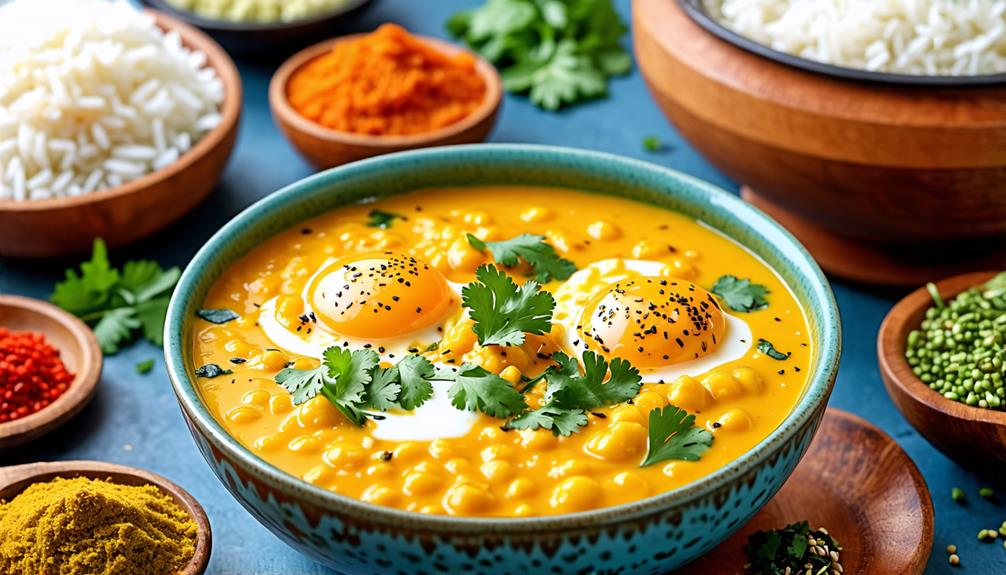
Elevate your traditional Dal Tadka by adding eggs, creating a nutritious and satisfying fusion dish. Dal Tadka, a staple in Indian cuisine, is made with cooked lentils tempered with spices like cumin, garlic, and ghee. Adding eggs enhances the protein content and creaminess of the dish. You can either poach the eggs separately or bake them directly into the lentils.
This approach shows the versatility of Dal Tadka and eggs, offering a creative way to enjoy both. Garnish the dish with fresh cilantro for a colorful, aromatic meal. Serve it with steamed rice or Indian flatbreads for a wholesome option.
Dal Tadka with eggs is popular in busy households because it is easy to prepare and comforting. Whether you need a quick dinner or a filling lunch, this dish fits the bill. It's also a great way to introduce more nutritious options into your diet without losing flavor.
Mexican Chilaquiles
If you enjoyed the fusion of Indian Dal Tadka with eggs, you might find Mexican Chilaquiles equally intriguing. This traditional Mexican breakfast dish is popular worldwide. It begins with fried corn tortillas cut into wedges, simmered in salsa or enchilada sauce, and topped with fried eggs, beans, avocados, and cheese. The mix of flavors and textures creates a delicious and hearty meal.
Chilaquiles are often served with various garnishes to enhance both flavor and presentation. Common garnishes include:
- Sour Cream - Adds a rich, tangy element.
- Cilantro - Provides a fresh, herbal note.
- Radishes - Give a crisp, peppery crunch.
- Queso Fresco - Adds a mild, creamy texture.
The origins of chilaquiles date back to pre-Columbian times, highlighting the long-standing use of tortillas in Mexican cuisine. Many families have unique recipes and regional variations, making it a versatile dish that can be customized. The addition of fried eggs increases both richness and protein content, making Chilaquiles an ideal breakfast.
Japanese Tamagoyaki
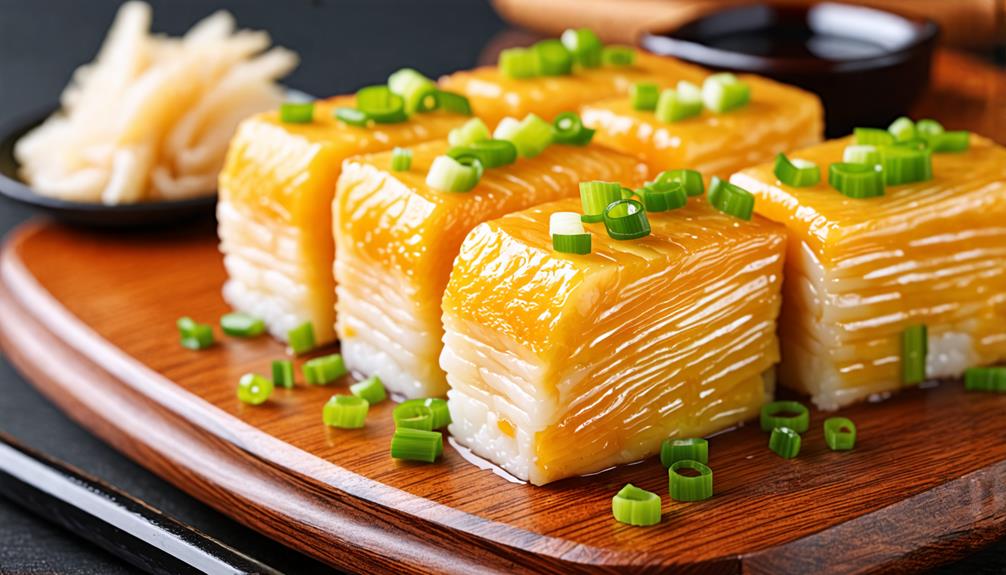
Let's explore Japanese Tamagoyaki, a rolled omelet that balances sweet and savory flavors. To make this dish, you need to master the technique of layering and rolling in a rectangular pan. Whether you prefer it plain or filled with vegetables and seafood, Tamagoyaki is a versatile addition to any meal.
- Ingredients: You'll need eggs, sugar, soy sauce, and mirin. Optional fillings include vegetables or seafood.
- Preparation: Beat the eggs in a bowl. Add sugar, soy sauce, and mirin, and mix well.
- Cooking: Heat a rectangular pan over medium heat. Lightly oil the pan.
- Layering: Pour a thin layer of egg mixture into the pan. Once it starts to set, roll it to one side.
- Repeating: Add another layer of egg mixture, lifting the rolled egg to let the new layer flow underneath. Roll again once set. Repeat until all the mixture is used.
- Finishing: Once rolled, remove from the pan and let it cool slightly. Slice into pieces and serve.
Tamagoyaki can be served warm or at room temperature. Enjoy it as a side dish or in sushi.
Mastering Rolled Technique
Mastering the rolled technique for Japanese Tamagoyaki demands precision and patience. This delicate Japanese rolled omelet blends whisked eggs with sugar, soy sauce, and mirin, balancing sweet and savory flavors. The challenge lies in using a rectangular pan, called a makiyakinabe, to create thin layers that you cook and roll. Practice is key to perfecting this technique.
Follow these steps to master Tamagoyaki:
- Whisk the Egg Mixture: Combine eggs with a touch of sugar, soy sauce, and mirin. This mixture forms the base of Tamagoyaki's flavor.
- Cook Over Medium-Low Heat: Pour a thin layer of the egg mixture into the pan. Cook it gently to achieve a fluffy, tender texture. Avoid high heat to prevent toughening the eggs.
- Roll Carefully: Once the initial layer sets, use a spatula to roll it to one end of the pan. Add more egg mixture and repeat, rolling each new layer over the previous one.
- Maintain Consistent Temperature: Keeping a consistent temperature ensures even cooking and prevents the delicate layers from breaking.
With practice, you'll master the rolled technique, making Tamagoyaki a versatile addition to your cooking skills.
Sweet or Savory Choices
For Tamagoyaki, you have the option to choose between sweet or savory styles. This Japanese rolled egg dish can be seasoned with sugar, soy sauce, and mirin for a sweet taste. For a savory version, use more soy sauce and add dashi. The unique layered structure of Tamagoyaki is made using a special rectangular pan called a *makiyakinabe*. This pan helps create the traditional thin layers that are rolled as they cook.
| Sweet Tamagoyaki | Savory Tamagoyaki |
|---|---|
| Seasoned with sugar, soy sauce, and mirin | Seasoned with soy sauce and dashi |
| Commonly served as *tamago sushi* | Often included in bento boxes |
| Delicate flavor profile | Rich umami flavors |
| Popular in sushi restaurants | Shows culinary skill |
Tamagoyaki is a versatile dish that can be a breakfast option or a favorite in bento boxes. Mastering this rolled egg dish is a respected culinary skill in Japan. Next time you want to try something different, make Tamagoyaki and explore its sweet and savory sides.
Korean Gyeran Jjim
Korean Gyeran Jjim is a steamed egg custard known for its fluffy and delicate texture. This comfort food is made by whisking eggs with water and seasoning, then cooking it until light and airy. Traditionally, Gyeran Jjim is prepared in a hot stone bowl called Ttukbaegi, which retains heat and ensures even cooking.
To enhance your Gyeran Jjim, consider adding these ingredients:
- Scallions: Finely chopped scallions add a fresh, mild onion flavor and a pop of color.
- Sesame Seeds: These provide a subtle nutty taste and some texture.
- Seafood: Small shrimp or clams can be added for a briny twist.
- Vegetables: Carrots, zucchini, or mushrooms can add extra nutrients and flavor.
Gyeran Jjim is often served as a side dish in Korean meals, along with rice and other banchan (side dishes). The steaming technique helps retain moisture, making it a soothing and satisfying option for any meal. Enjoy this versatile dish as a valuable addition to your culinary repertoire.
Filipino Kwek Kwek

After exploring the comforting flavors of Korean Gyeran Jjim, let's turn to the vibrant streets of the Philippines. Here, you'll find Kwek Kwek, a popular Filipino street food. Made from hard-boiled quail eggs, this snack is coated in a bright orange batter and deep-fried until crispy.
The orange color, often achieved using food coloring or annatto seeds, makes Kwek Kwek visually appealing. This dish isn't just about looks, though; it's typically served with a vinegar-based dipping sauce or a sweet and spicy sauce. The tangy vinegar sauce adds flavor and balances the richness of the fried batter.
You'll commonly find Kwek Kwek at street stalls and markets, making it an accessible snack for both locals and tourists. It's more than just a tasty bite; it often brings back nostalgic memories of childhood for many Filipinos. So, if you're in the Philippines, make sure to try this crispy fried treat.
Thai Khai Jiao
Explore Thai street food with Khai Jiao, a popular Thai omelet known for its light and crispy texture. This dish is a staple in Thailand and combines beaten eggs fried in hot oil. The edges become crisp, while the center stays fluffy and tender, providing a pleasing contrast.
Khai Jiao is more than just an omelet; it's a meal you can customize. Add vegetables, herbs, or meats to enhance its savory flavors. Typically, fish sauce is included, adding a distinct Thai depth of flavor.
Here are reasons to try Khai Jiao:
- Crispy Texture: High-heat frying gives the omelet its crispy edges.
- Savory Flavors: Fish sauce and other seasonings create a rich, umami taste.
- Versatility: Customize it with your favorite fillings.
- Perfect Pairing: Serve with rice and sweet chili sauce for a balanced meal.
Enjoy Khai Jiao as a quick, delicious, and authentic taste of Thai street food.